Showing posts with label Korean. Show all posts

Tuesday, May 17, 2011

Spicy Chili Chicken (3 Star)

For Christmas, one of Brandon's sisters gave him a Korean cookbook. We've had fun trying recipes from it and this recipe is now one of our favorites. I doubled it and made some changes to suit our tastes, but the original recipe is from "Quick & Easy Korean Cooking" by Cecilia Hae-Jin-Lee. This is spicy, (but easily toned down to suit your spice-level) full of vegetables, and cooks up like a stir fry.


Spicy Chili Chicken
doubled and adapted from "Quick & Easy Korean Cooking" by Cecilia Hae-Jin-Lee

3 Tablespoons olive or grape seed oil
2 to 2 1/2 pounds boneless skinless chicken breasts, cut into 2-inch slices
1 large sweet potato, peeled and cut into thin strips about 2 inches long
1 large onion, cut in half, then cut into 1/2-inch wedges
2 zucchini, cut into 1-inch cubes
1/3 cabbage, cut into 1-inch cubes
4 cloves garlic, peeled and finely diced
1/2 bunch green onion, cut into 1-inch lengths
3 Tablespoons Korean chili paste called Gochujang, which can be purchased at Asian markets (this is half of what the original recipe called for)
2 Tablespoons soy sauce (this is a lot more than the original recipe called for)
1 Tablespoon sugar (this is more than the original recipe called for)

Heat two tablespoons of the oil in a large skillet or wok over medium-high to high heat. Add the chicken, sweet potato, and onion and stir-fry until the chicken is cooked through and the vegetables begin to brown, about 10-15 minutes. Add one more tablespoon of oil (if necessary) to the pan and add the zucchini, cabbage, and garlic and stir-fry another 3 minutes, until tender-crisp. Add the green onion, chili paste, soy sauce, and sugar and cook stirring, until combined.

Serve immediately with hot rice.

Monday, May 2, 2011

Chap Chae (4 Star)

Yay, a four star dinner recipe! My boys love this meal, although some of them pick out the veggies and only eat the noodles. Does that count? I guess I'm counting it as liking the "meal".

Amazingly, my eldest son ate all of the veggies in his chap chae last night. This was a big deal because he rarely eats veggies. His comment was they didn't taste too different, they mostly added crunch.

These noodles are very fun for kids. They are sweet potato starch noodles (but taste nothing like sweet potatoes--they actually have very little flavor, absorbing whatever flavor is added to them), sometimes called Korean glass noodles. I purchase them at our local Asian market. I've never looked for them at the regular grocery store, so I don't know if they are sold there. But the Asian market is fun! Try it out. (By the way, I have recently discovered that the Asian market is the best place to buy sweet potatoes around here! They have the best kind and they are fresher than the ones at the grocery store.) Nutritionally speaking, I'm not sure how great these noodles are. I think they are a step up from Ramen (what isn't?) and they are gluten free, if that's a concern for you.

Chap Chae is a Korean dish. I used the recipe from Steamy Kitchen. She lists certain vegetables, but really, you can use whatever veggies sound good to you. I used carrots, onions, yellow pepper, green cabbage, spinach, and zucchini this time and it was excellent. The cabbage actually turned out great because I shredded it fairly small and it became a bit translucent and blended with the noodles so the boys who picked out their veggies ended up eating the cabbage, not even noticing. Whatever veggies you use, just stir-fry them to tender crisp and you're good to go. I've also used bits of scrambled eggs in this, with success.

This recipe does have a lot of sugar in it, so I decreased it by half, and we were all thrilled with the flavor.

You can also change the noodle to veggie ratio to fit your liking. I made ours with lots of noodles to compensate for the veggie picker-outers.


Click here for the recipe.

Friday, April 23, 2010

Kimchi Jjigae (3 Star)

If you are familiar with kimchi, you know that it is the very spicy, fermented cabbage that Koreans eat with every meal. Brandon loves it, but as for myself, I have not developed a taste for it, though I like to try it every now and then to see if it's better than I remembered from the last time. None of the boys like it, either. However, I really enjoyed this jjigae (soup) that Brandon made from the kimchi, and so did some of the boys. It is a spicy soup, but the spice is tempered by chicken, onions, tofu, and broth.


Kimchi Jjigae

2 Tablespoons olive oil
2 lbs boneless skinless chicken breasts, cubed
1 onion, sliced
3 cloves garlic, chopped or pressed
1 teaspoon chopped ginger
1 lb kimchi
water enough to cover vegetables and meat
1 Tablespoon honey or sugar
1/2 teaspoon salt
1/2 teaspoon pepper
2 Tablespoons soy sauce
1 Tablespoon red pepper paste
1 package extra firm tofu
1-2 zucchini, sliced

Heat oil in a large soup pot on medium high to high heat. When hot, add chicken, onion, garlic, ginger, and 1/4 teaspoon pepper. Stir occasionally until meat is browned but not cooked through.

Turn the heat down to medium and layer the kimchi on top of the meat (leave the kimchi juice in the jar). Cover and let simmer for five minutes.

Add water until the ingredients are covered. Add remaining kimchi juice, soy sauce, honey or sugar, salt, pepper, and red paste. Bring to a boil and simmer on low for ten minutes.

Add tofu (or rubber chicken, as dubbed by our youngest son) and zucchini and simmer for an additional five minutes. Serve with rice.

Tuesday, April 20, 2010

Kim bap (1 Star)

Kim bap is the Korean version of sushi rolls. Personally, I'm not too adventurous when it comes to sushi and I like to stay away from raw fish, but I do like Kim bap. It took some time for me to learn to like the seaweed but now I really enjoy these rolls. Amazingly, our first born can't get enough of this stuff. He could probably eat at least half of this batch of Kim bap by himself, given the chance. None of our other boys care for this, though some of them do like to eat the seaweed sheets plain, strangely enough.


Making Kim bap involves a lot of steps, so let's get started.

Kim bap

1. Rice

Cook 2 1/2 cups of sticky (Asian, or short grain) rice. Traditionally, white rice is used, but we use brown so that we have the nutritional benefits and we also enjoy the more nutty flavor (our kids favor white but we don't cater to them on this matter). This should yield about 5 cups cooked. Cook the rice far enough in advance so that it has time to cool enough to handle but is still warm and fresh. Do not use rice that is cold because it is then too hard and dry to shape into the rolls. We usually cook the rice and then cook the Pulgogi and the soup (coming up next!). By then the rice is usually done, and we let it cool while we prepare the other Kim bap ingredients. Then we mix up the rice and assemble the Kim bap.

To the warm rice add:

3-4 Tablespoons rice vinegar
2-3 Tablespoons sugar

Combine until thoroughly blended, tasting and adding vinegar and sugar as needed, to obtain a mildly sweet and sour taste. Set aside.

2. Pickled Vegetable

1/3 daikon radish (can be found at Asian markets, but I've also seen it in some grocery stores--other veggies could also work well such as cucumber, zuchinni, or carrots)
vinegar to cover vegetable
1 Tablespoon sugar

Peel the radish and slice into long, thin strips. If you use cucumber, be sure to remove the seeds and then slice into strips. Place in a small bowl and pour enough vinegar to submerge cucumber. Add sugar and stir to combine. Set aside. (This could be done a day ahead.)

3. Meat

We use the cooked Pulgogi. Cut it into long, thin strips and set aside.

4. Carrots

Peel and slice carrots into long, thin strips. Heat a large skillet on medium-high heat with a Tablespoon of olive oil. Stir-fry carrot strips until tender-crisp and remove from pan. Set aside.


5. Eggs

4 eggs
1-2 Tablespoons water
a few pinches of sea salt

Whisk above ingredients together and pour into a large, greased skillet (use the same one used for the carrots) that has been heated to medium heat. When eggs have set, flip entire circle to the other side (or flip a half at a time) and cook for another minute or two. Remove onto a cutting board and cut into strips. Set aside.


6. Spinach

10 oz fresh spinach

Boil a small pot of water. Using tongs or a slotted spoon, submerge spinach, a handful or two at a time, in boiling water for 10-30 seconds. Remove and drain on paper towels. Set aside.


7. Assembly

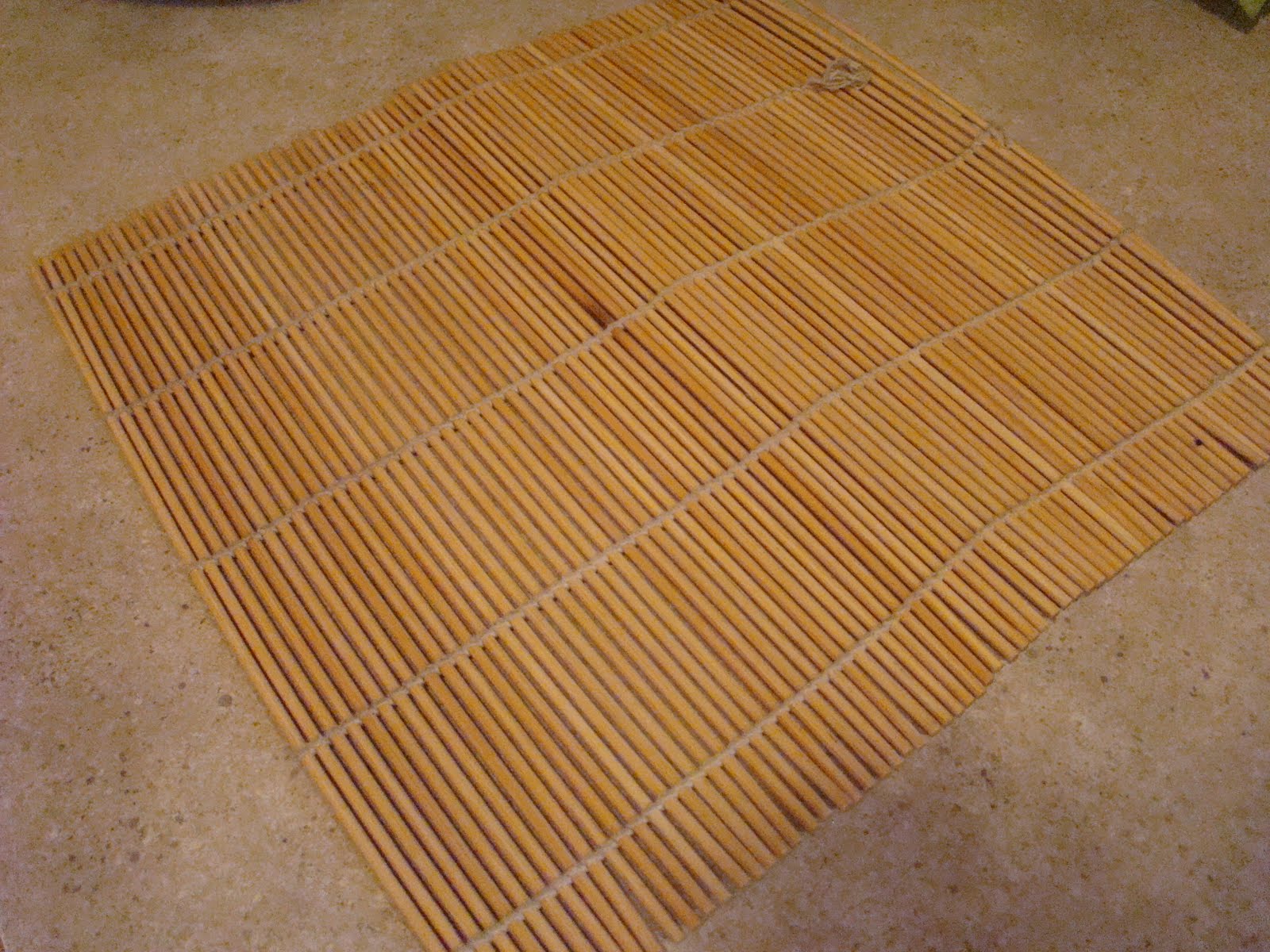
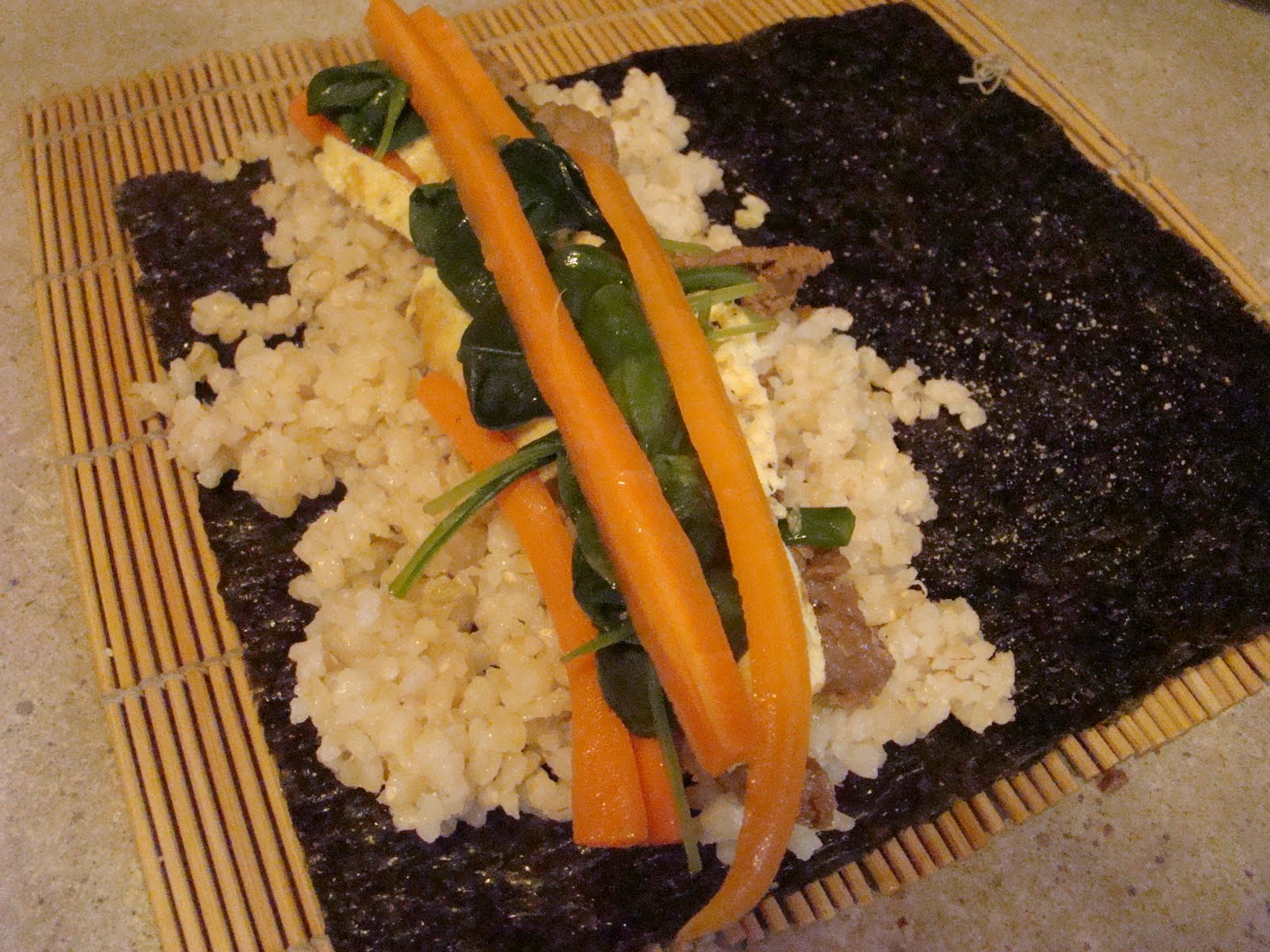
To make the rolls, a bamboo string roller makes things a lot easier. Place it on your work surface with the bamboo sticks running horizontal to you, and place all of the ingredients close by.


Place a sheet of roasted, dried seaweed onto the roller and sprinkle with sea salt.


Spread a layer of rice onto the side of the seaweed closest to you, covering slightly more than half of the sheet.


In the center of the rice layer, place strips of pickled vegetable, meat, carrot, egg, and spinach.


Pick up the edge of the roller that is closest to yourself and carefully fold over until the roller touches the other side of the seaweed. Press down firmly to compact the roll together. Do not allow the edge of the roller to fold under with the seaweed, but keep it on top. Dip your finger into the pickled vegetable juice and moisten the entire edge of the seaweed that is farthest away from yourself.


Continue to firmly roll until the seaweed is closed and the moistened seaweed edge is sticking to the side of the roll. The bamboo roller should make a U shape around the Kim bap and when finished rolling, just unfold the roller so it is flat again.


Remove the Kim bap log to a cutting board and, using a sharp serrated knife, cut into slices. Sample the unruly edge pieces and give the rest of them to the bottomless pit boy who wants nothing more than to eat Kim bap until he bursts asunder.


Place Kim bap slices onto a plate and sprinkle with toasted sesame seeds.


Then devour! If you don't have a bottomless pit boy who wants nothing more than to eat Kim bap until he bursts asunder, invite over the neighbors to help you out.

Makes around 3-4 dozen, but is quite variable depending on how much you stuff the rolls and how thick or thin that you slice them.

Pulgogi (3 Star)


Since Brandon lived in Korea for two years and developed a love for the food (among other things) he has learned to cook several Korean dishes. Our first-born passionately loves the Korean food that Brandon cooks and recently begged and pleaded until Brandon agreed to make a Korean meal. The next several posts will be about this meal.

First up is Pulgogi or Korean Barbecued Beef. This is probably the most popular of all Korean dishes. As with most foods there are many variations, some more spicy or sweet or salty. The Pulgogi I've eaten in Korean restaurants has been quite sweet. Ours is not so sweet and a little more spicy, adapted from a recipe in a cookbook called "Flavours of Korea" by Marc and Kim Millon.

Pulgogi

2 lbs sirloin steak (I often use a London broil or a roast that is on sale) cut into very thin strips (1/8-1/4 inch thick--either have a butcher do this or cut the meat yourself when partially frozen) across the grain

Marinade

10 Tablespoons soy sauce
6 garlic cloves, peeled, crushed, and finely chopped, or pushed through garlic press
2 inch piece of fresh ginger, peeled, crushed, and finely chopped
4 Tablespoons sesame oil
2 Tablespoons sugar
1-2 teaspoons freshly ground black pepper

1 yellow onion sliced into strips
1 bunch of green onions, sliced
5 Tablespoons toasted sesame seeds
1 head of leaf lettuce such as romaine, red leaf, or butter crunch, leaves washed and separated

Mix all the marinade ingredients together and place into a Ziploc bag along with the meat. Knead together and allow to sit in the refrigerator for at least an hour, preferably overnight, turning the bag occasionally.

After marinating, the meat can be grilled, but we always fry it in a large cast iron skillet because our grill is a little crummy and doesn't get hot enough. Heat the pan on medium-high or high heat with a couple of tablespoons of olive oil. First stir-fry the yellow onion for one or two minutes. Then add the meat and all of the marinade and fry for 6-8 minutes, turning every now and then to brown the meat but do not overcook! The meat can be a little pink in the middle. The key to tender Pulgogi is to cook on hot heat very fast. Add the green onion during the last minute of cooking and then remove from the heat. Sprinkle toasted sesame seeds on top.

Pulgogi can either be served on top of sticky rice (we use brown) or as lettuce wraps. For lettuce wraps, place some meat and onions in the center of a lettuce leaf along with a bit of rice and a dab of hot pepper paste. Wrap up the leaf and eat.